
Find expertise for this diagnosis and this decision.
A prominent name or institution does not by itself establish a fit. Begin with the question that needs answering, then evaluate the physician’s relevant experience, consultation format, and ability to work with physicians already involved.
Start a conversationStart with the decision, not the physician’s name.
Ask your treating physician what another specialist could help clarify. Write the question in one or two sentences.
A clear question helps the receiving office determine whether the physician’s work fits what you need.

Diagnosis confirmation
Treatment purpose
Recommendation
Sequence
Procedure/
specialty question Differing recommendations
Another unresolved decision
Choose criteria you can explain.
The purpose is a transparent search, not a claim that one physician is universally superior.
Experience relevant to diagnosis
Experience with decision/
treatment Role
Available format
Need for in-person exam or additional review
Timing/
availability How recommendation is communicated
Coordination with local team
Research/
trial capability when relevant
Decision to clarify
Relevant experience
Receiving-office confirmation
Workable arrangement
Ask the receiving office to confirm the match.
Give the office the consultation question and ask whether the physician evaluates people with this diagnosis and decision.

What physician can address
Format
Required reports/
images/ pathology/ notes Office review requirements
Missing-material process
Written recommendation
Follow-up contact
Return path to treating physicians
A scheduled appointment is not enough. The office should explain what the physician needs and what the consultation can accomplish.
Decide how the specialist and local team will work together.
Responsibilities can change. Record the current arrangement and update it with the plan.

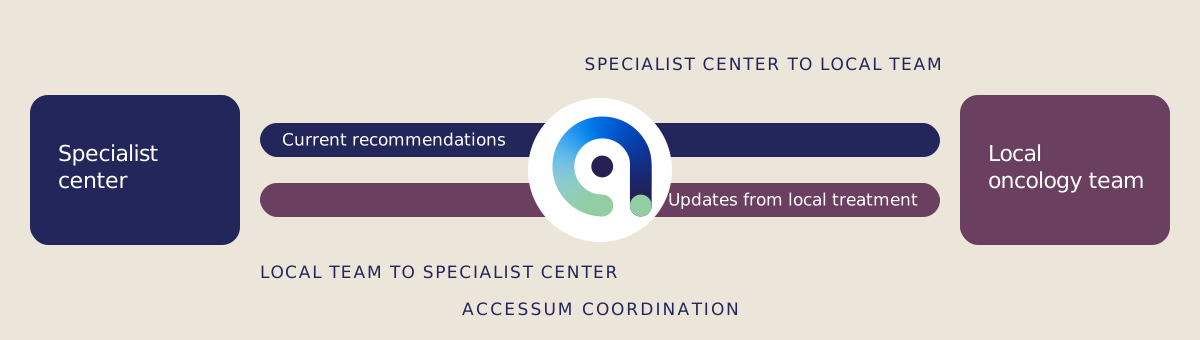

COORDINATION
Who remains responsible for overall plan?
Each part of treatment?
Who receives results?
Explains changes?
Handles between-visit concerns?
What can happen locally?
What requires specialist center?
How does new information move?
You should be able to see how the options were chosen.
A transparent search lets you discuss options with treating physicians without relying on reputation alone.
Consultation question
Criteria
Why physician may fit
Office confirmation
Format/
timing Record requirements
Practical limits
Reason pursued or not
Accessum researches the fit and coordinates the work.
Accessum begins with the question, researches physicians and programs relevant to the diagnosis and decision, confirms consultation requirements, organizes requested records, and coordinates the offices involved. Accessum keeps the specialist’s recommendation connected to the treating team and written strategy.
Accessum keeps the specialist, local physicians, records, recommendations, and next steps connected.
Finding a cancer specialist is part of Professional Healthcare Management: the same team, the same written strategy, without starting over when another physician or institution enters the picture.
Find the physician for the question you need answered.
Physicians lead the medicine. Accessum manages the strategy, coordination, and follow-through around it.
A registered nurse responds within a day.
Accessum sets out the work and the terms in writing before anything begins.
Management and coordination are available remotely nationwide. Our nurses are based in Colorado and can travel with you to your specialist; in-home support is available in Colorado. Both are arranged separately.
Until now, there was no one to hire. Now there is.